Roof Repairs
Repairs across Ryde and Eastwood, where end-of-life terracotta and gutters overwhelmed on steep blocks cause most leaks.
Learn more →Full re-roofing in tile or Colorbond for inter-war bungalows, 1960s flats and newer homes across the Ryde district. Free inspection and written quote.
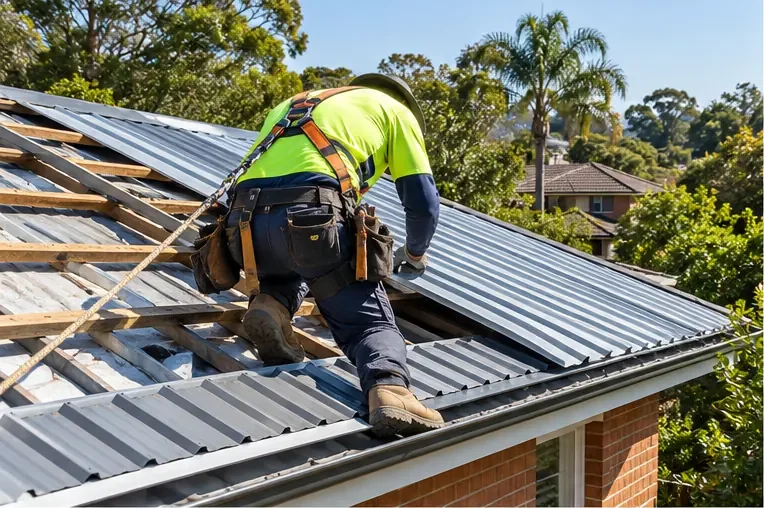
Most of the roofs we look at across Ryde, West Ryde, Denistone and Eastwood do not need replacing. They need their mortar, valleys and flashings fixed. Replacement earns its keep in a narrower set of cases:
If you want someone to tell you the truth about which category you are in, call (02) 9100 0199. The inspection is free and so is the written quote.
Both work in this district. The choice turns on the house, the pitch, the block and what the neighbours and the council expect to see.
| Consideration | Tile | Colorbond steel |
|---|---|---|
| Suits | Inter-war and post-war brick with existing tiled neighbours and streetscape expectations | Low pitches, extensions, long spans, steep access, heritage-free streets |
| Weight | Heavy; the framing must be sound | Light; takes load off old framing |
| Minimum pitch | Needs a conventional pitch to work | Profiles available for low pitch where tile cannot go |
| Maintenance | Mortar and pointing need attention over time | Fasteners and flashings are the wear points |
| Near the water | Fine; the fixings and flashings matter most | Specify a coastal-grade finish close to the river |
A point people miss: changing tile to metal changes the look of the house from the street, and that is precisely the change a conservation area control exists to manage. On a plain post-war brick house in Marsfield or North Ryde it is rarely an issue. On a listed house, or inside one of the City of Ryde heritage conservation areas, or anywhere in the Hunters Hill municipality, it has to be checked first.
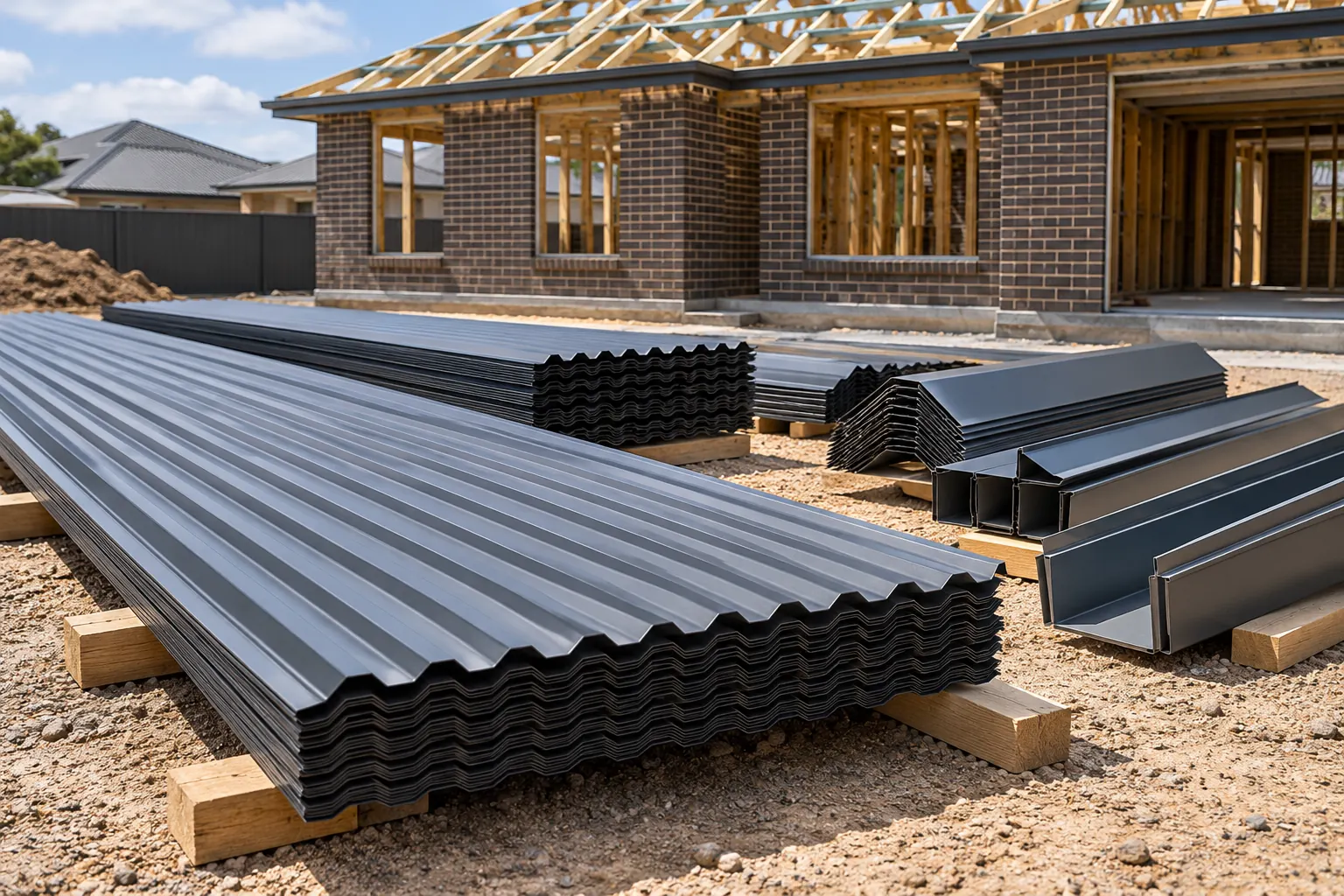
The difference between a good re-roof and a cheap one is almost never the sheets. It is the detailing:
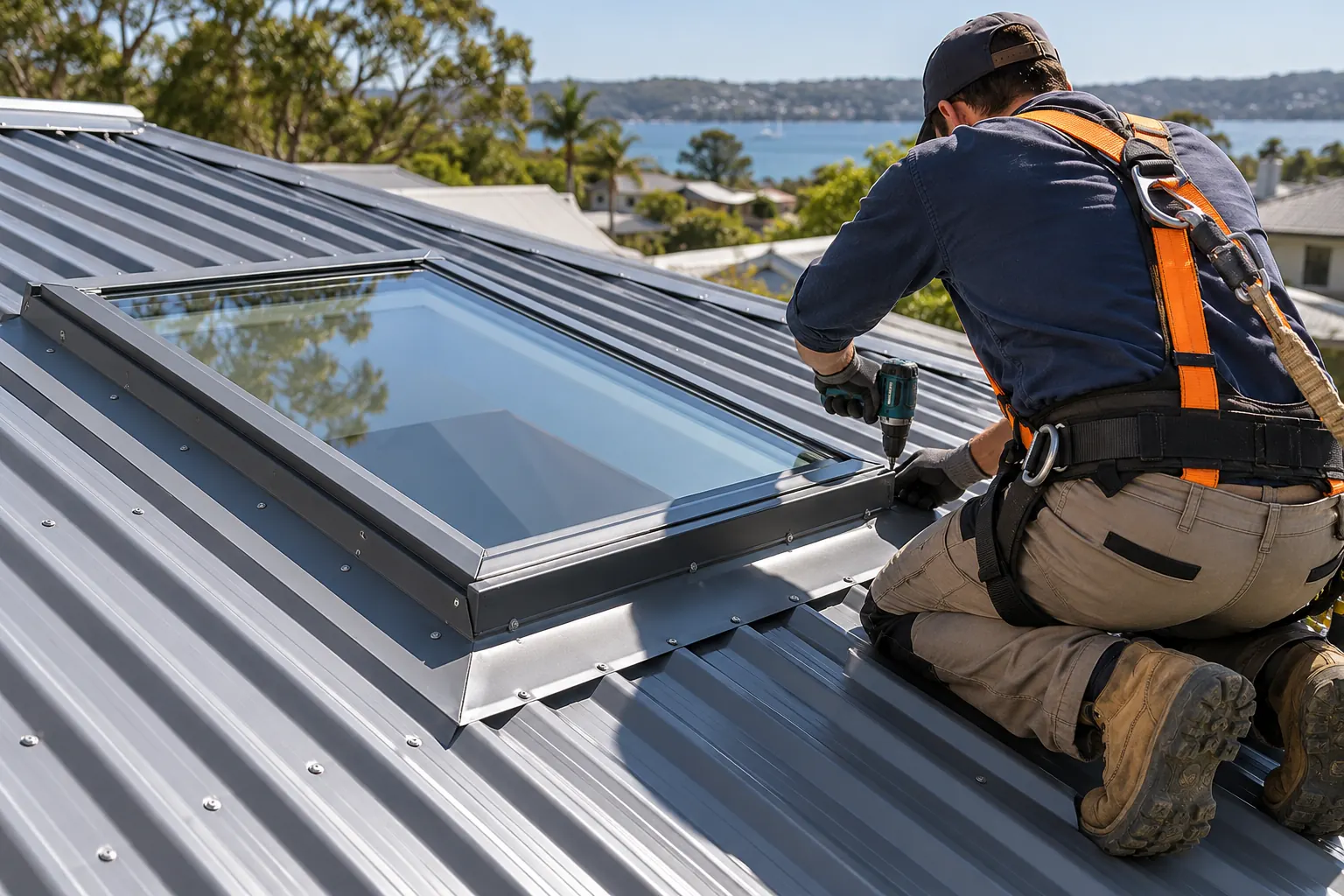
On a Federation or Californian Bungalow near West Ryde or Eastwood station, the roof is often the last original element and the framing is lighter than modern practice. That is manageable, but it needs looking at: batten condition, rafter spacing, any sag in the plane, and whether a previous owner has already added weight. Taking a heavy tile roof off and putting a light steel one on can be the kinder option structurally.
On the 1960s and 70s walk-ups the question is usually different again — low-pitch sheet, box gutters behind a parapet, internal downpipes. Replacing that roof means re-engineering the drainage at the same time, because the original box gutter and outlet sizing is frequently the reason the roof failed.
No one can price a re-roof by phone, and a figure quoted sight unseen is a figure that changes later. What actually moves it: roof area, pitch, the material and profile you choose, the state of the framing and battens once the old roof is off, access and edge protection, the amount of flashing and valley work, whether drainage is being upgraded, heritage requirements, and whether asbestos removal is involved. We write the allowances down so you can see them.
Work is carried out by established, licensed and insured roofing contractors working to NSW Fair Trading requirements. Residential building work over $5,000 including GST in NSW requires a licence and a written contract, work above $20,000 requires home building compensation cover, and the completed job carries a written workmanship warranty.
Call (02) 9100 0199 or send the form. If you want to compare paths first, read about roof restoration and metal and Colorbond roofing, or check the suburbs we cover — including North Ryde, Marsfield and Denistone East.
Repairs across Ryde and Eastwood, where end-of-life terracotta and gutters overwhelmed on steep blocks cause most leaks.
Learn more →Colorbond roofing across the Ryde district, including tile-to-metal conversions on low-pitch roofs.
Learn more →Restoration for original terracotta roofs around Ryde: rebedding, repointing and recoating rather than replacing.
Learn more →Gutter and downpipe upgrades across Ryde, sized for the runoff a steep block actually concentrates.
Learn more →Storm response across Ryde, Eastwood and Gladesville after heavy rain and wind.
Learn more →Roof inspections and written reports across the Ryde district, including slate and heritage roofs at Hunters Hill.
Learn more →The tiles decide it. If they are still sound and the faults are mortar, valleys and flashings, repair or restoration is the better buy. Replacement becomes the sensible option when the tiles themselves are spent — porous, delaminating, breaking underfoot — or when the battens and sarking underneath have gone, or when you are being quoted repairs on every plane of the roof at once. We inspect first and tell you which column you are in.
Usually yes, because it carried the last one, but it has to be looked at rather than assumed. On inter-war and post-war houses we check the battens, the rafter spacing and condition, and any sagging in the roof plane before specifying. Where the framing has suffered from long-term leaks it may need remedial work. Going the other way, tile to metal takes weight off the structure, which is one of the reasons people choose it.
For a standard house in the City of Ryde, replacing like with like generally does not. Changing the material — tile to metal, or anything that alters slate — is the change most likely to trigger approval, and a heritage listing or a heritage conservation area changes the answer again. In the Municipality of Hunters Hill, complying development is not available inside a conservation area at all. We check your address against the planning controls before quoting a material change.
The roof is never left open overnight on a normal job. Re-roofing is staged in sections, so the part that is stripped on any given day is the part that gets closed up the same day, with temporary cover if the weather turns. A typical single-storey tile-to-Colorbond change runs a matter of days rather than weeks; a large or steep two-storey roof with difficult access takes longer. The quote states the sequence.
Old tile and sheet metal is removed from site and recycled where it can be. Asbestos is a separate matter and is not touched casually: in NSW, removing more than 10 square metres of non-friable asbestos requires a licensed asbestos removalist, who must notify SafeWork NSW at least five calendar days before the work starts. If we find asbestos cement in eaves, gables or sheet roofing, it is identified in the quote with the removal priced and scheduled properly.
Tell us what you need and we'll get straight back to you. Prefer to talk? Call (02) 9100 0199 and speak to someone local.
Call (02) 9100 0199